
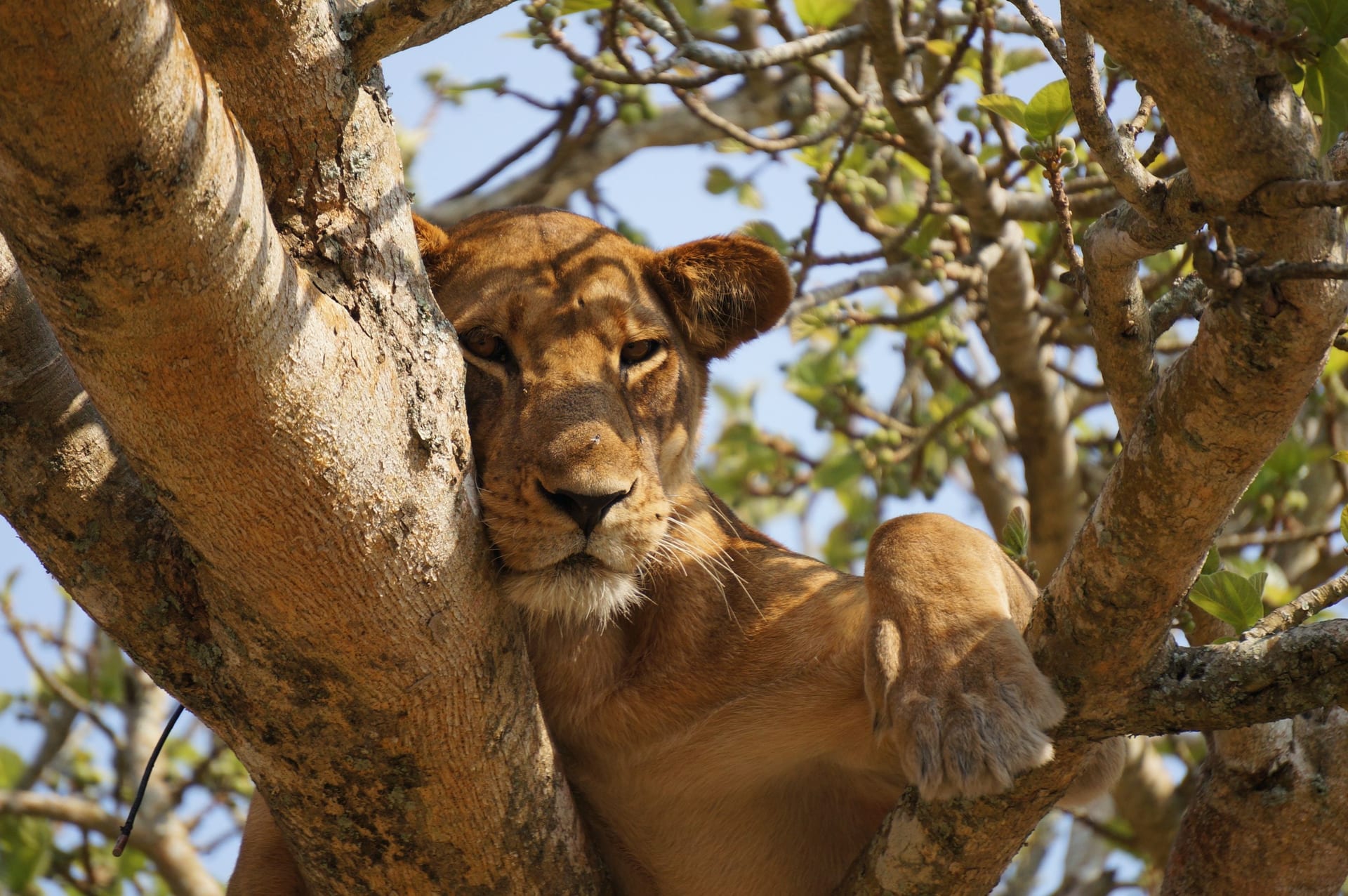
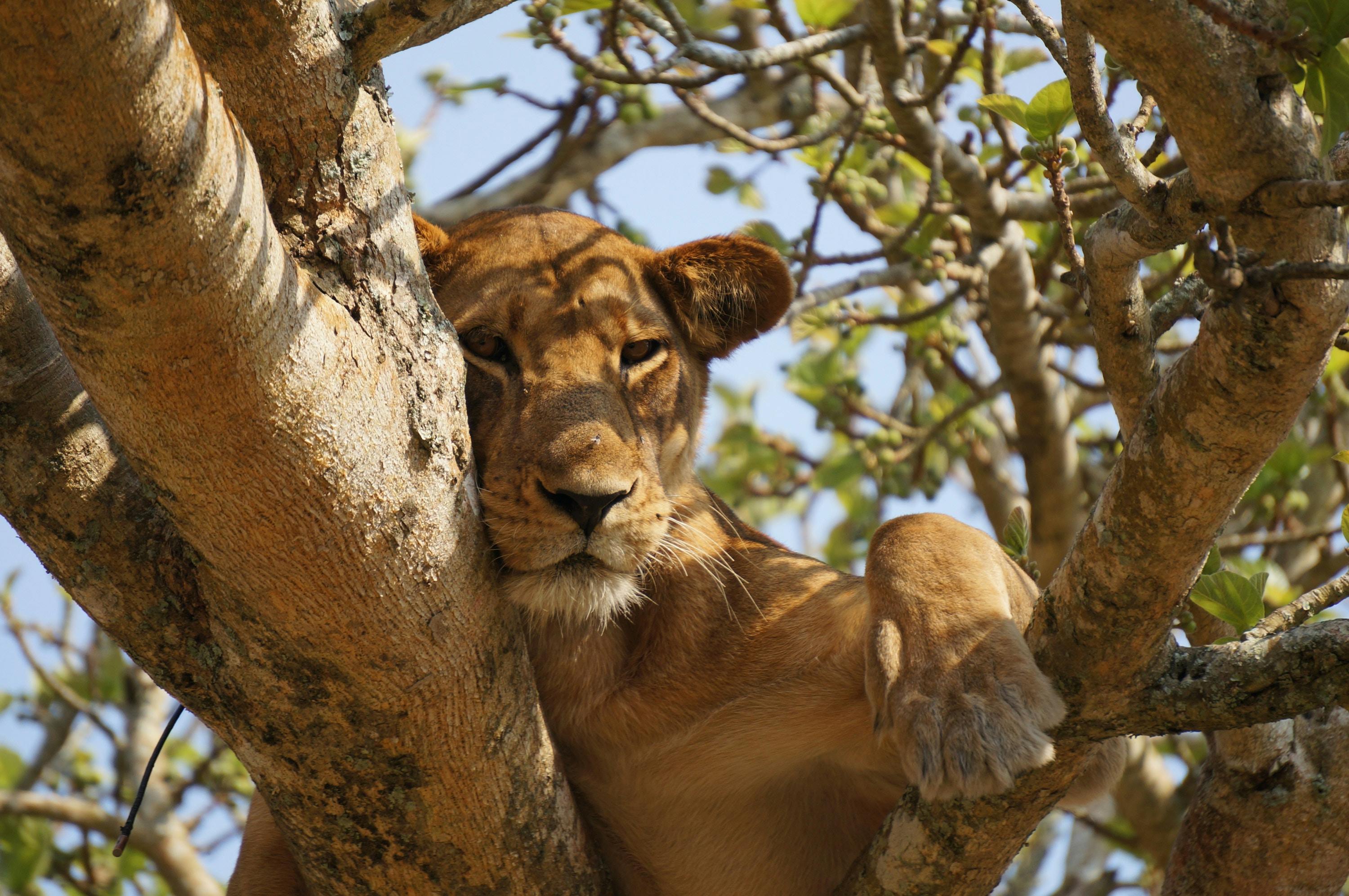
Queen Elizabeth National Park covers 1,978 square kilometers of western Uganda, stretching from the crater-dotted highlands north of the Rwenzori Mountains down to the shores of Lake Edward. It’s the country’s most visited national park, and for good reason. You’ll find tree-climbing lions in the Ishasha sector, hippo-dense channels on the Kazinga Channel, and over 600 bird species recorded within the park boundaries. But what makes this place worth your time isn’t just the wildlife list. It’s how the landscape shifts every few hours of driving, from open grassland to dense tropical forest to volcanic crater lakes, all inside a single park.
Baheka Travel operates private, guided safaris through Queen Elizabeth National Park as part of several Uganda itineraries, with a single driver-guide assigned to you for the entire journey. The park sits roughly 410 kilometers (about a 6-hour drive) southwest of Kampala, though most visitors break the journey with a stop at Lake Mburo or the Equator crossing.
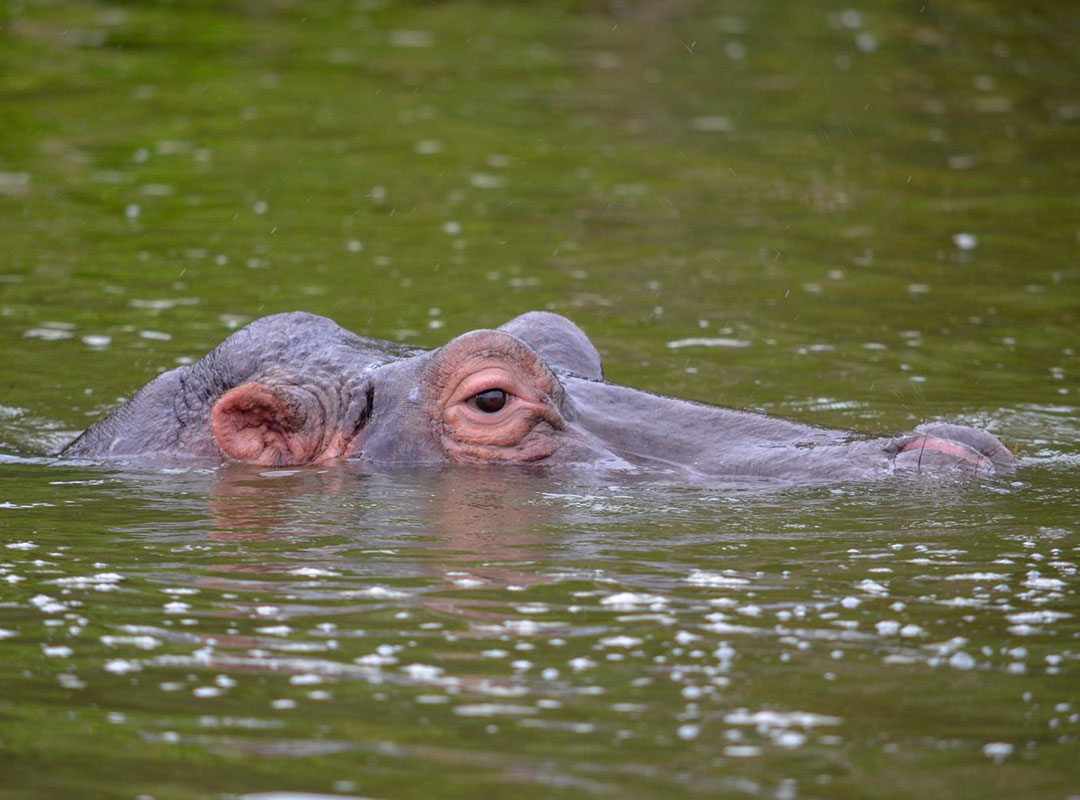
The Kazinga Channel is a 32-kilometer natural waterway connecting Lake Edward to Lake George, and it holds one of the highest concentrations of hippos in Africa. A boat cruise here (typically 2 to 3 hours, departing around 2pm or 4pm) puts you within 10 meters of hippo pods, Nile crocodiles, and African buffalo drinking at the water’s edge.
The birding along the channel is serious. African fish eagles perch on dead trees along the banks, pied kingfishers hover and dive, and you’ll often spot malachite kingfishers if you’re paying attention to the papyrus edges. I’d skip the morning departure if given the option. Afternoon light on the channel is warmer, the animals are more active near the water, and the photography is noticeably better.
The smell hits you before you see the hippos. A thick, organic, almost swampy scent that tells you the water is alive with animals. It’s not unpleasant, honestly. Just unmistakable.
The southern Ishasha sector is where Queen Elizabeth National Park earns its reputation for something you won’t easily find elsewhere in East Africa. Tree-climbing lions. These lions regularly drape themselves across the branches of large fig trees, sometimes four or five animals in a single canopy, legs dangling.
Why they climb is still debated. The prevailing theory involves escaping tsetse flies and the heat of the grassland floor, but nobody’s entirely sure. What matters to you is that Ishasha is about a 2 to 3 hour drive south from the main Mweya Peninsula area of the park. It’s worth every kilometer.
The sector is quieter than the northern circuits. Fewer vehicles. The landscape is flatter, with wide grasslands and scattered fig trees, and your guide will know which trees to check first. Game drives here start early, around 6:30am, and the lions tend to climb during the warmer midday hours.
If you’re combining Queen Elizabeth with gorilla trekking in Bwindi Impenetrable National Park, Ishasha sits right on the route between the two. A 5-day itinerary linking Bwindi and Queen Elizabeth is one of the most efficient ways to see both parks without backtracking.
North of the Kazinga Channel, the landscape shifts dramatically. The Katwe-Kikorongo explosion craters area contains over 30 volcanic crater lakes, some filled with brilliant blue or green water, others dry and salt-encrusted. The crater drive is a half-day excursion, and it gives you views that look nothing like the rest of the park.
Lake Katwe itself is a working salt mine. Local communities have extracted salt from its shores for centuries, and you can still see the shallow evaporation ponds and the workers who tend them. The heat near the crater floor is intense, especially between 11am and 2pm, so go early if you can.
Feature | Detail |
|---|---|
Number of crater lakes | 30+ |
Elevation range | 900m to 1,200m above sea level |
Best time to visit | Morning, before midday heat |
Access | 4WD recommended, especially in wet season |
The craters are often overlooked by visitors who focus only on game drives and the boat cruise. That’s a mistake. The geological story here is visible in every direction, and on a clear morning you can see the Rwenzori Mountains (Africa’s third-highest peak at 5,109 meters) from the crater rims.
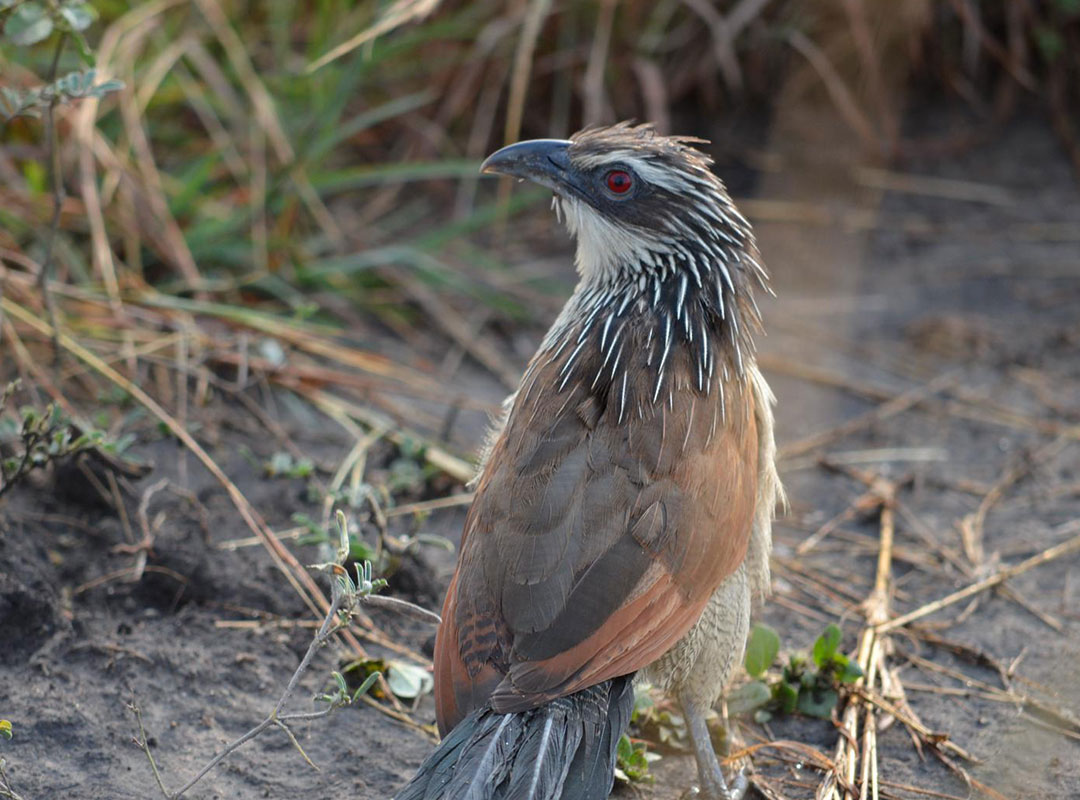
Queen Elizabeth National Park has recorded over 612 bird species, which places it among the top birding destinations on the continent. The Mweya Peninsula alone can produce 50 to 70 species in a single morning walk if you’re with a knowledgeable guide.
Key species to look for:
African skimmer (seasonal, best spotted along the Kazinga Channel between December and March)
Martial eagle (often seen soaring above the Kasenyi Plains)
Black bee-eater (common in the Maramagambo Forest edges)
Shoebill stork (rare here but occasionally reported in the swampy areas near Lake George)
The Maramagambo Forest, on the park’s eastern edge, is a different world from the open savanna. Dense canopy, blue monkeys overhead, and the bat cave (home to thousands of Egyptian fruit bats and the pythons that feed on them). The forest walk takes about 2 hours and is guided.
If birding is a primary goal, Baheka Travel’s 8-day birding itinerary covers Mabamba Swamp, Murchison Falls, and Kibale Forest alongside Queen Elizabeth, giving you access to multiple habitat types and the best chance at a long species list.
Queen Elizabeth National Park is open year-round, but the experience changes with the seasons. Uganda has two dry seasons (June to August and December to February) and two wet seasons (March to May and September to November).
Season | Months | Conditions | Best for |
|---|---|---|---|
Dry | June–August | Dusty tracks, animals near water | Game drives, Kazinga boat cruise |
Dry | December–February | Warm, clear skies | Photography, birding migrants |
Wet | March–May | Heavy rain, lush vegetation | Fewer crowds, lower rates |
Wet | September–November | Intermittent rain | Birding (migratory species arrive) |
Game viewing is generally easier in the dry months because animals concentrate around water sources. But the wet season has its own appeal. The park turns green, the crater lakes fill, and migratory bird species arrive from Europe and North Africa. Your mileage may vary on which you prefer, but I think the December to February window hits the best balance of weather, wildlife, and crowd levels.
The park entrance fee for international visitors is $40 per person per day (Uganda Wildlife Authority rates). Guided boat cruises on the Kazinga Channel cost $30 per person.
Most travelers reach Queen Elizabeth National Park by road from Kampala, a drive of roughly 6 hours via the Masaka-Mbarara highway. The road is paved the entire way to Kasese, with the final stretch into the park on well-maintained murram roads.
Internal flights are available from Entebbe to Kasese airstrip (about 1 hour), which cuts the travel time significantly. Baheka Travel arranges transfers from the airstrip directly into the park. For those coming from Bwindi, the drive through Ishasha takes about 3 hours and is a game drive in itself.

Accommodation ranges from budget bandas inside the park to mid-range lodges on the Mweya Peninsula. The peninsula is the most popular base because it sits between the Kazinga Channel and the crater area, giving you quick access to both.
A few practical things worth knowing: bring sunscreen and a hat for the boat cruise (there’s limited shade on the smaller vessels), carry binoculars even if you’re not a birder, and pack layers for early morning game drives when temperatures can drop to 15°C at higher elevations.
The 4-day gorilla and Queen Elizabeth itinerary is the most popular combination trip, with permits and logistics confirmed before you pay.
Queen Elizabeth National Park works well as part of a longer Uganda circuit. Its central-western location makes it a natural link between Bwindi Impenetrable National Park (gorilla trekking, 3 hours south via Ishasha), Kibale Forest National Park (chimpanzee tracking, 2 hours north), and even Murchison Falls National Park if you’re doing a comprehensive tour.
For a wider Uganda experience, the 15-day Uganda itinerary covers savanna wildlife, primate tracking, and cultural encounters across multiple national parks, with Queen Elizabeth as a central anchor. And if you’re interested in community-based tourism alongside your safari, the Nyabushabi Village homestay adds a dimension that game drives alone can’t provide.
Queen Elizabeth National Park spans nearly 2,000 square kilometers of western Uganda, holds over 612 bird species and 95 mammal species, and offers experiences from volcanic crater hikes to Kazinga Channel boat cruises to tree-climbing lion encounters in Ishasha. It’s the single park in Uganda where savanna, forest, wetland, and crater landscapes converge within one boundary. Every Uganda safari route runs through it for a reason.
 Powered by TypeHero
Queen Elizabeth National Park: What Every Visitor Should Know Before Going
Why Uganda Is Called the Pearl of Africa
Ecotourism in Uganda: What Community-Owned Travel Looks Like on the Ground
Community-Owned Tourism in Kabale: How Your Booking Funds Local Development
Uganda Safari Guides and Game Drive Value: What to Know for 2026
Gorilla Tracking Safaris in Kabale: What 2026 Travelers Need to Know